Car will not start - what to check first
Before calling for a tow, check five things first. Most of the time the car is fine and you just need a boost, a fuse, or a key that talks to the transponder.

What you'll learn
- The difference between dead-battery symptoms and starter symptoms
- Why a clicking noise usually means battery, not starter
- When a stuck shift interlock prevents start (and how to bypass)
- Why transponder keys fail and what to try first
Step by step
- Check the dashboard. Do any lights come on when you turn the key to ON?
- Try turning the key (or pushing start) with the brake held firmly.
- If you hear rapid clicking, the battery is low. Try a jump.
- If you hear one click or silence, the starter or ignition may be bad.
- Check that the key fob has battery (swap with a spare if you have one).
- If the transmission is not fully in Park, move the shifter and try again.
If you have tried all five and the car still will not start, you need a tow. Ask the assigned operator what they can check on scene before quoting a tow.
Why cold weather exposes a weak starting system
A Twin Cities cold snap makes every part of starting harder. A battery’s chemical reactions slow in low temperatures, so it delivers less starting power. At the same time, cold engine oil becomes thicker and harder to circulate. The starter must work harder while receiving less help from the battery.
That’s why a car may start normally in October and struggle in January. The battery may have had enough power for mild weather but little reserve. Cold weather doesn’t always create the problem. It often exposes a battery, cable, or charging problem that was already developing.
Listen closely when you try to start the car. The sound helps narrow the cause:
- A slow crank often points to low battery power, poor cable connections, or a starter struggling against a cold engine.
- Rapid clicking usually means the starter isn’t receiving enough steady power. A weak battery or poor connection is a common cause.
- One solid click can indicate a starter or starter-solenoid problem. It can also happen when the battery has some power but not enough to turn the engine.
- Total silence may point to the key, ignition circuit, shift position, fuse, or a completely discharged battery.
Dashboard behavior adds another clue. Lights that dim sharply during a start attempt suggest a major voltage drop. Bright lights with no crank may point somewhere beyond the battery. These signs aren’t a complete diagnosis, but they help you describe the problem clearly.
Why the jump worked, then the problem returned
A jump provides outside power to start the engine. It doesn’t repair the battery or charging system. If the car starts after a jump but fails again two days later, something still needs attention.
The battery may no longer hold a useful charge. It may also have been drained by a light, accessory, or another electrical load. Loose or corroded battery connections can create similar symptoms. A battery test can show whether it accepts and retains a charge.
The alternator is another possibility. Once the engine starts, the charging system should support the car’s electrical needs and recharge the battery. If the alternator isn’t doing that, the car may run briefly and then lose power. A charging-system test can separate an alternator problem from a battery that simply won’t hold energy.
Don’t assume that driving after a jump solves the issue. A successful jump only proves that added electrical power helped. It doesn’t identify why the available power was too low.
Problems that can look like a dead battery
Some no-start problems happen even when the battery has power. The dividing line is whether the engine cranks. “Cranks but won’t start” is different from “won’t crank.”
The transmission isn’t recognized as being in Park
An automatic transmission uses a safety switch to prevent starting in gear. If the car doesn’t recognize Park, the starter may remain silent. The shifter can look properly positioned while the switch or linkage says otherwise. Trying Neutral may help identify that problem, but keep your foot firmly on the brake.
The car doesn’t recognize the key
A push-button car may refuse to start when it can’t detect the key. A weak fob battery can cause intermittent recognition. Some vehicles have a designated spot where the fob can be held for backup detection. That location varies, so check the owner’s manual.
A transponder or immobilizer warning on the dashboard can also point to key recognition. If a spare key works, the original key or fob may be the issue.
A fuse has opened the starting or fuel circuit
A blown fuse can interrupt the starter, ignition, fuel, or control circuit. Replace a fuse only with the same rating listed for that position. If the replacement fails again, stop replacing it. A repeated failure indicates an electrical fault that needs diagnosis.
The engine cranks but doesn’t catch
A steady cranking sound means the starter is turning the engine. The failure may involve fuel delivery, ignition, air, or engine controls. Cold weather can expose a restricted fuel system, and moisture can contribute to freezing in vulnerable parts of that system. A clogged line or other fuel-delivery problem can produce similar symptoms.
A jump may not help when the engine already cranks at normal speed. Repeated attempts can drain the battery and make the original problem harder to identify. Note any warning lights, unusual smells, or changes in the cranking sound before calling for help.
An electric car can have a dead battery while fully charged
Electric vehicles usually have a high-voltage traction battery and a separate 12-volt battery. The smaller battery powers control systems, locks, computers, and the equipment needed to place the car in gear. If it dies, the EV may appear completely unresponsive even when the traction battery is full.
That can leave the doors, charge-port release, or electronic shifter unavailable. The correct access and jump points depend on the model. Use the manufacturer’s instructions instead of connecting cables to an unfamiliar terminal.
Most EV makers call for a flatbed when the vehicle must be transported. A wheel-lift can be wrong for some drivetrains or parking states. Tell the assigned operator the exact make, model, location, and whether the car can enter tow mode. Mention if the wheels are locked or the vehicle is inside a garage.
Check for freeway help before paying for service
MnDOT’s Freeway Incident Response Safety Team, called FIRST, patrols 11 routes across about 220 miles of Twin Cities freeways. Coverage runs roughly 6 a.m. to 8 p.m. Monday through Friday, with limited weekend coverage.
FIRST crews can jump a battery, change a flat, provide a small amount of gas, clear debris, and push a disabled vehicle from a live lane. They can also call a tow truck. FIRST doesn’t tow vehicles.
If the car is exposed to moving traffic, personal safety comes first. For an active emergency, call 911. Don’t stand between the vehicle and traffic, and don’t attempt repairs in a live lane.
A dead car can still be towed during parking restrictions
A vehicle that won’t start is still subject to posted parking restrictions. This matters during snow emergencies and street sweeping. Waiting for a battery or part doesn’t protect the car from a city tow.
Minneapolis snow-emergency parking
Minneapolis uses a three-day plowing sequence. Day 1 begins at 9 p.m. Parking is prohibited on both sides of Snow Emergency routes until those routes are fully plowed.
Day 2 begins at 8 a.m. Parking is prohibited on the even-numbered side of non-route streets and on parkways until plowed. Day 3 begins at 8 a.m. Parking is prohibited on the odd-numbered side of non-route streets until plowed.
Text MPLSALERTS to 77295, sign up through Smart911, or call 612-348-SNOW (7669) for updates.
St. Paul snow-emergency parking
St. Paul begins with a Night Plow phase from 9 p.m. to 7 a.m. The Day Plow phase runs from 8 a.m. to 5 p.m. Enforcement can continue for up to 96 hours after the declaration.
Text StPaul Snow to 468311 or call 651-266-7569 (PLOW). The city issues alerts in English, Spanish, Hmong, and Somali.
Bright pink street-sweeping signs are another warning. Minneapolis and St. Paul post them at least 24 hours ahead. Parking is prohibited from 7 a.m. to 4:30 p.m. on that street’s sweep day. Check the applicable city map because exact dates change each year.
When the next honest step is a tow
A tow makes sense when the engine won’t crank after usable power is supplied, when it cranks but won’t start, or when the vehicle can’t be moved safely. It’s also appropriate when an EV can’t enter tow mode or the manufacturer calls for flatbed transport.
Before calling, gather the vehicle’s exact location, make, model, and drivetrain. Note the sounds it makes and whether the dashboard lights work. Share any warning messages, recent jump attempts, and whether the wheels roll. If you’re in a ramp or garage, include the clearance and exit conditions.
Quick Tow Minneapolis is a referral line that connects drivers with independent local operators. Call (952) 900-4065 and leave those details. The line accepts calls at any hour, and each message is recorded and transcribed.
A pro can handle it.
Towing and roadside service across the Twin Cities metro. One local line, taking calls day and night.
Keep learning.
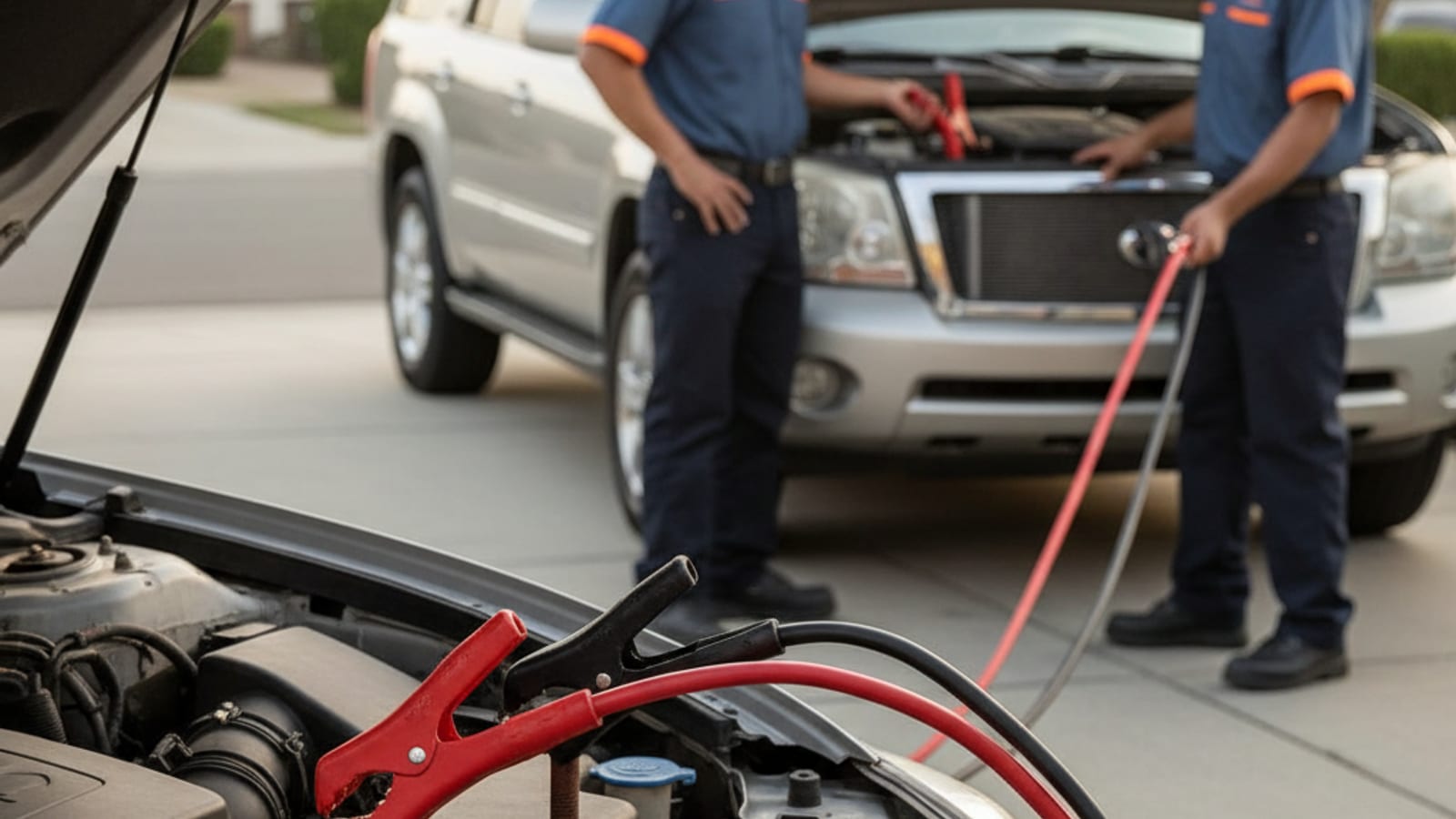
Jump-start a dead battery safely
Jumper cables are simple until you hook them wrong. Do it right and you'll avoid sparks, ruined electronics, and a tow you didn't need.
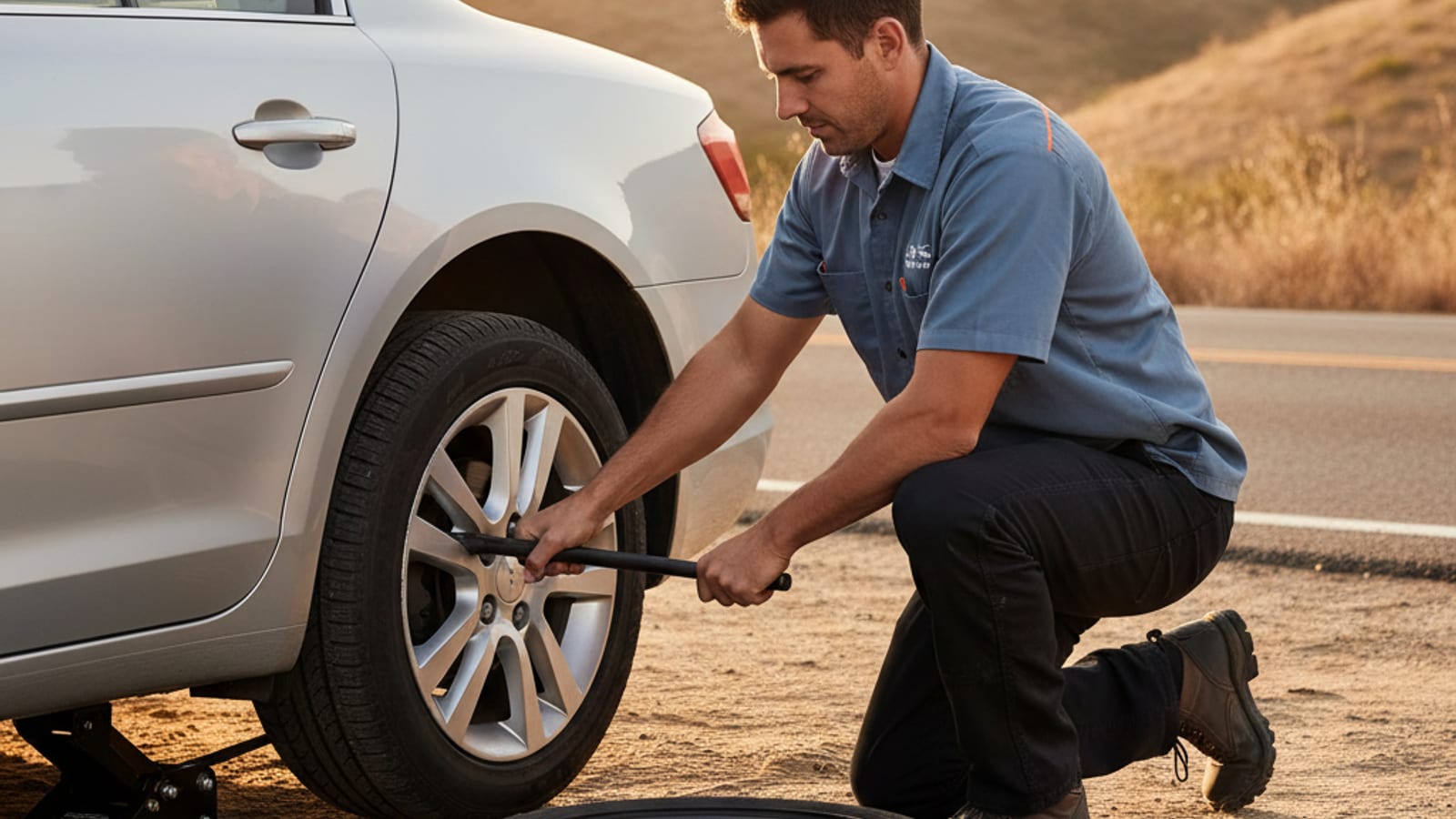
Change a flat tire on the side of the road
The difference between a 20-minute shoulder stop and an hour on the phone with a tow company is knowing where the spare and jack live before you need them.
What to do if you slide on ice or hit a flooded low spot
Twin Cities winters glaze bridges and ramps before flat streets, and a heavy spring rain fills a low underpass faster than it looks. First step: stop making it worse.