Jump-start a dead battery safely
Jumper cables are simple until you hook them wrong. Do it right and you'll avoid sparks, ruined electronics, and a tow you didn't need.
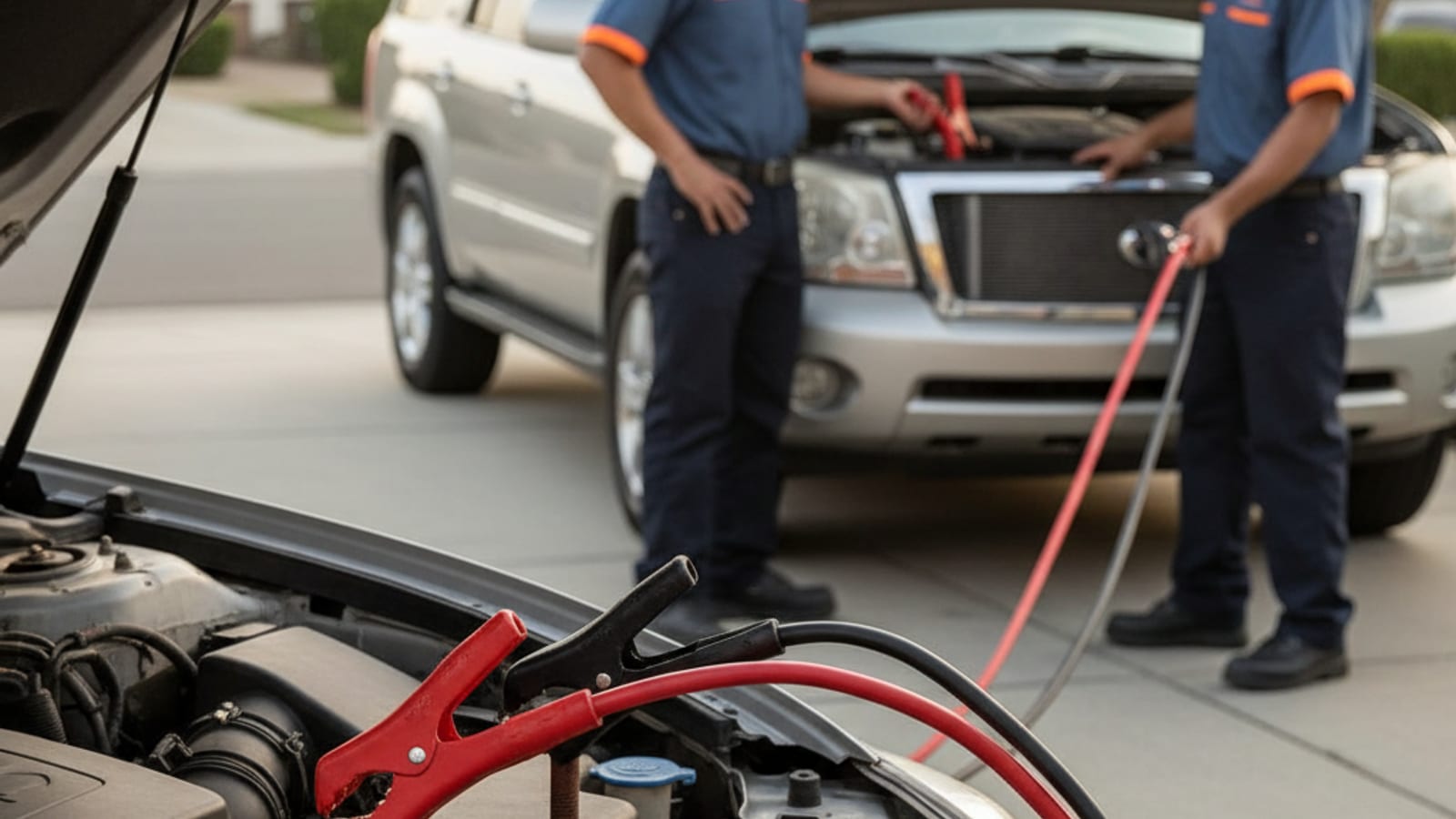
What you'll learn
- The correct red-then-black clamp order (and why it matters)
- Why the last clamp goes on a bare metal point, not the dead battery
- When a jump-pack beats a cable-to-cable jump
- Signs that the alternator is bad and a jump will not fix the car
Step by step
- Pull the donor car close enough for the cables to reach. Both cars OFF.
- Clamp RED to POSITIVE (+) on the dead battery.
- Clamp RED to POSITIVE (+) on the donor battery.
- Clamp BLACK to NEGATIVE (−) on the donor battery.
- Clamp BLACK to bare metal on the dead car's engine block (not the battery).
- Start the donor. Wait 2 minutes. Start the dead car. Let run 10 minutes before driving.
If the car cranks weakly or dies again within an hour, the alternator or battery has failed. A second jump will not help, so call for a tow to a shop. Twin Cities batteries take a beating in a long winter: a hard overnight freeze pulls the charge out of a weak battery, and a dead battery at the curb is one of the most common cold-morning calls in the metro. If your battery is more than three years old and it has died once this winter, replace it before it strands you on a night when every operator is already committed to snow-emergency work. MnDOT's FIRST freeway crews can jump-start a battery in a live lane during their patrol hours, but a battery that keeps dying needs a shop.
Why the clamp order matters
The order controls where the final electrical connection happens. A lead-acid battery can vent hydrogen. The last clamp may spark as the circuit closes, so that spark should happen away from the battery.
That’s why the final black clamp goes on bare engine metal in the dead car. Choose a solid, unpainted metal point away from the battery, belts, fans, and other moving parts. Don’t place it on the dead battery’s negative terminal unless the vehicle manufacturer specifically directs you there.
Polarity matters just as much. Positive connects to positive. The donor battery’s negative terminal connects through the black cable to the dead car’s approved ground point. Don’t let the red and black clamps touch while either cable is connected.
Disconnect the cables in the reverse order after the dead car starts. Keep loose cables, sleeves, scarves, and gloves away from moving engine parts.
Jump-starting in a Twin Cities winter
A dead battery beside a snowy Minneapolis street is different from one in a warm garage. Darkness, traffic, ice, and stiff cables all make mistakes more likely.
Clear snow from both vehicles before opening either hood. You need to see the battery area, terminals, warning labels, and any manufacturer-designated jump points. Brush snow away instead of pushing it into the engine compartment.
Wear dry gloves that still let you grip each clamp firmly. Use a headlamp when possible. If you only have a small flashlight, use one you can hold in your teeth while keeping both hands free. Set your phone somewhere secure if you’re using its light. Don’t balance it on the battery or engine.
Position the running car so you can work from the curb, a driveway, or another protected area. Don’t arrange the vehicles in a way that forces you to stand in a traffic lane. The cars must not touch each other. Set both parking brakes and turn off lights, climate controls, heated seats, and other accessories before connecting the cables.
Cold can also hide a dangerous battery condition. Never try to jump a frozen battery. Don’t assume a battery is safe merely because the case looks normal from above. Check the sides and any visible fluid before connecting anything.
When a jump pack is the better tool
A portable jump pack avoids the need to position a second vehicle nearby. That’s useful in a tight Lake Street parking space, a crowded apartment lot, or a garage where cables can’t reach safely.
A pack also reduces the number of connections between two vehicles. It still has to be used with the correct polarity and at the approved jump points. Read the pack instructions and the vehicle owner’s manual before switching it on.
The correct pack size depends on the engine, fuel type, temperature, and the pack manufacturer’s rating system. A four-cylinder engine generally asks less from a pack than a V8. A diesel can require substantially more starting power, especially in Minnesota cold. One universal amp figure for each engine type could not be confirmed from the approved source material.
Check the vehicle manual for its jump-start requirements. Then use the jump-pack maker’s application chart for that exact engine. Don’t rely only on a large number printed on the front of the package. Confirm that the rating applies to your vehicle and expected winter temperature.
Keep the pack charged before winter trips. A pack left depleted in the trunk may not help when the temperature drops. Inspect its case and cables regularly, and stop using it if the case swells, cracks, or leaks.
Do not connect cables to a damaged battery
Stop if the battery case is swollen, cracked, or leaking. Don’t jump a battery with visible ice inside. A rotten-egg smell is also a reason to back away and avoid creating a spark.
Don’t lean directly over the battery while inspecting or connecting it. Keep flames, cigarettes, and other ignition sources away from the engine compartment. If you can’t identify the terminals or approved jump points clearly, the job has moved beyond a safe roadside attempt.
Hybrids and electric vehicles need special care
A hybrid or electric vehicle usually has a low-voltage system as well as a high-voltage traction battery. The low-voltage system may have an approved jump procedure. The traction battery is a separate system and must not be jump-started with ordinary cables or a portable pack.
Battery locations and connection points vary. Some vehicles provide remote jump terminals under the hood even when the low-voltage battery sits elsewhere. Follow the owner’s manual exactly. Don’t remove high-voltage covers, touch orange cables, or improvise a connection to the traction system.
Also confirm whether the vehicle may be used as a donor. Don’t assume every hybrid or electric vehicle can safely jump another car.
Modern electronics leave less room for error
Newer vehicles contain many electronic control modules. A loose clamp, a poor ground, or reversed polarity can expose those systems to an electrical surge.
A reverse-polarity connection sends current through the vehicle the wrong way. It can damage fuses, wiring, charging components, and electronic modules. If you notice that a clamp is on the wrong terminal, don’t start either vehicle. Turn everything off and follow the cable maker’s safe disconnection instructions.
Don’t guess based on cable position or terminal location. Find the positive marking and the manufacturer-approved ground point. Dirt, battery covers, and dim light can hide the labels, so clean only enough snow or grime to identify them before proceeding.
What to do after the engine starts
Starting the engine proves that the jump supplied enough power for that moment. It doesn’t prove the battery is healthy.
Keep the engine running after disconnecting the cables. A very short drive may not replace the energy used to start the car, particularly when the heater, defroster, lights, and heated seats are drawing power. Follow the vehicle manual’s guidance, then arrange a battery and charging-system test.
A weak battery may accept a jump but fail to hold the charge. The car may start again soon after driving, then be dead the next morning. An alternator problem is different. The alternator produces electrical power while the engine runs and helps recharge the battery. If it isn’t producing enough power, the vehicle may lose electrical functions or shut down even after a successful jump.
Repeated jumps aren’t a repair. Stop trying if the engine won’t stay running, warning lights remain on, the cables become unusually hot, or the battery shows damage.
When roadside safety comes first
Don’t attempt a jump while standing in a live freeway lane. Move away from traffic if you can do so safely. For an active emergency, call 911.
MnDOT’s Freeway Incident Response Safety Team, known as FIRST, patrols 11 routes across about 220 miles of Twin Cities metro freeways. Patrols run roughly 6 a.m. to 8 p.m. Monday through Friday, with limited weekend coverage.
FIRST crews can push a disabled vehicle out of a live lane, jump-start a battery, change a flat tire, provide a small amount of gas, clear debris, and call a tow truck. This roadside help is provided at no charge to the stranded driver. FIRST does not tow vehicles.
On a local street, parking lot, or driveway, stop when you can’t inspect the battery safely, identify the proper connections, or keep clear of traffic. Quick Tow Minneapolis is a referral line that records and transcribes messages at any hour. Call (952) 900-4065 to leave your location and roadside request so it can be matched with an independent local operator.
A pro can handle it.
Towing and roadside service across the Twin Cities metro. One local line, taking calls day and night.
Keep learning.
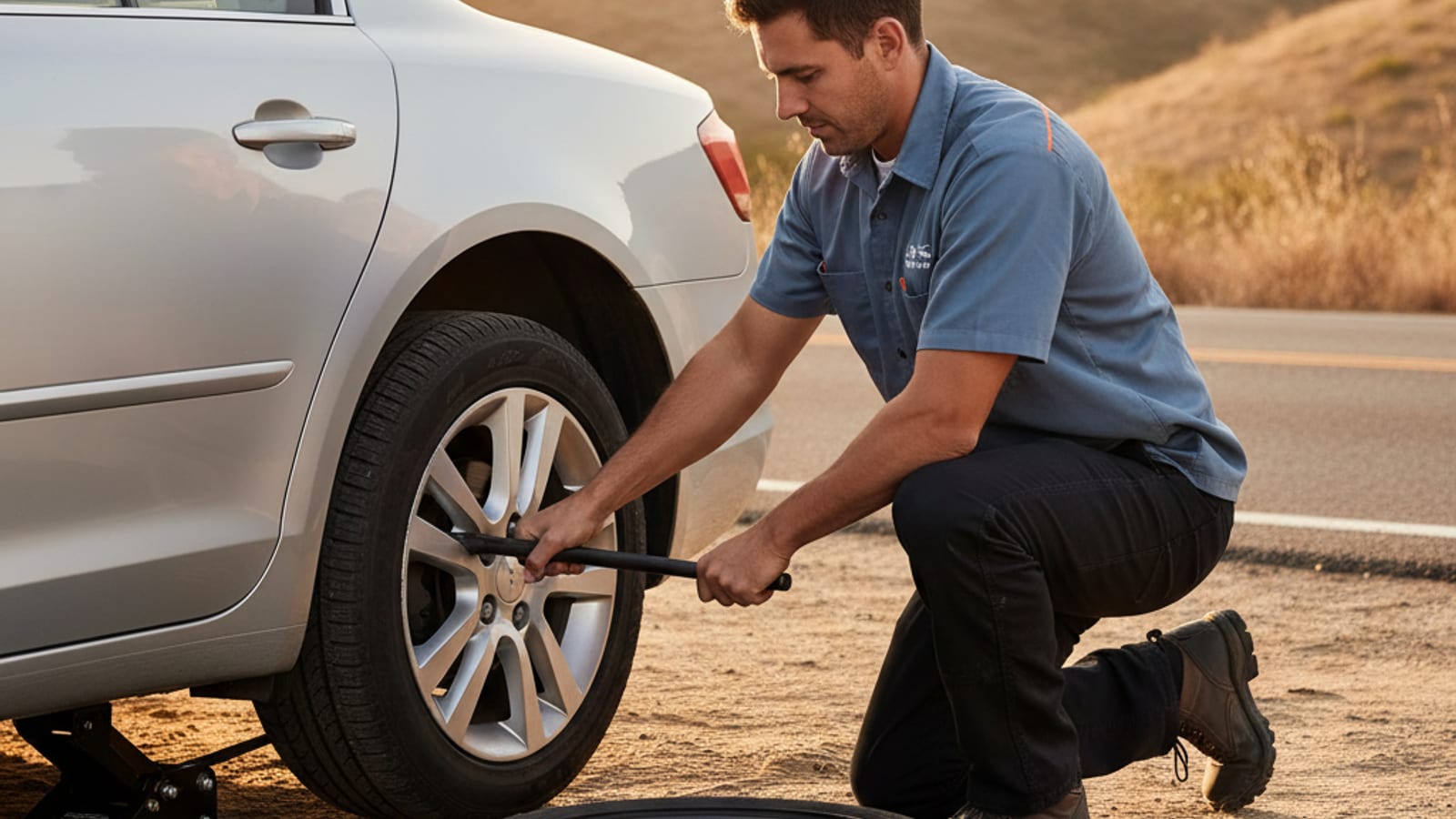
Change a flat tire on the side of the road
The difference between a 20-minute shoulder stop and an hour on the phone with a tow company is knowing where the spare and jack live before you need them.
What to do if you slide on ice or hit a flooded low spot
Twin Cities winters glaze bridges and ramps before flat streets, and a heavy spring rain fills a low underpass faster than it looks. First step: stop making it worse.
Prepare your vehicle for a tow
A few minutes of prep before the tow truck arrives saves time, avoids damage, and makes the whole call go faster.