Change a flat tire on the side of the road
The difference between a 20-minute shoulder stop and an hour on the phone with a tow company is knowing where the spare and jack live before you need them.
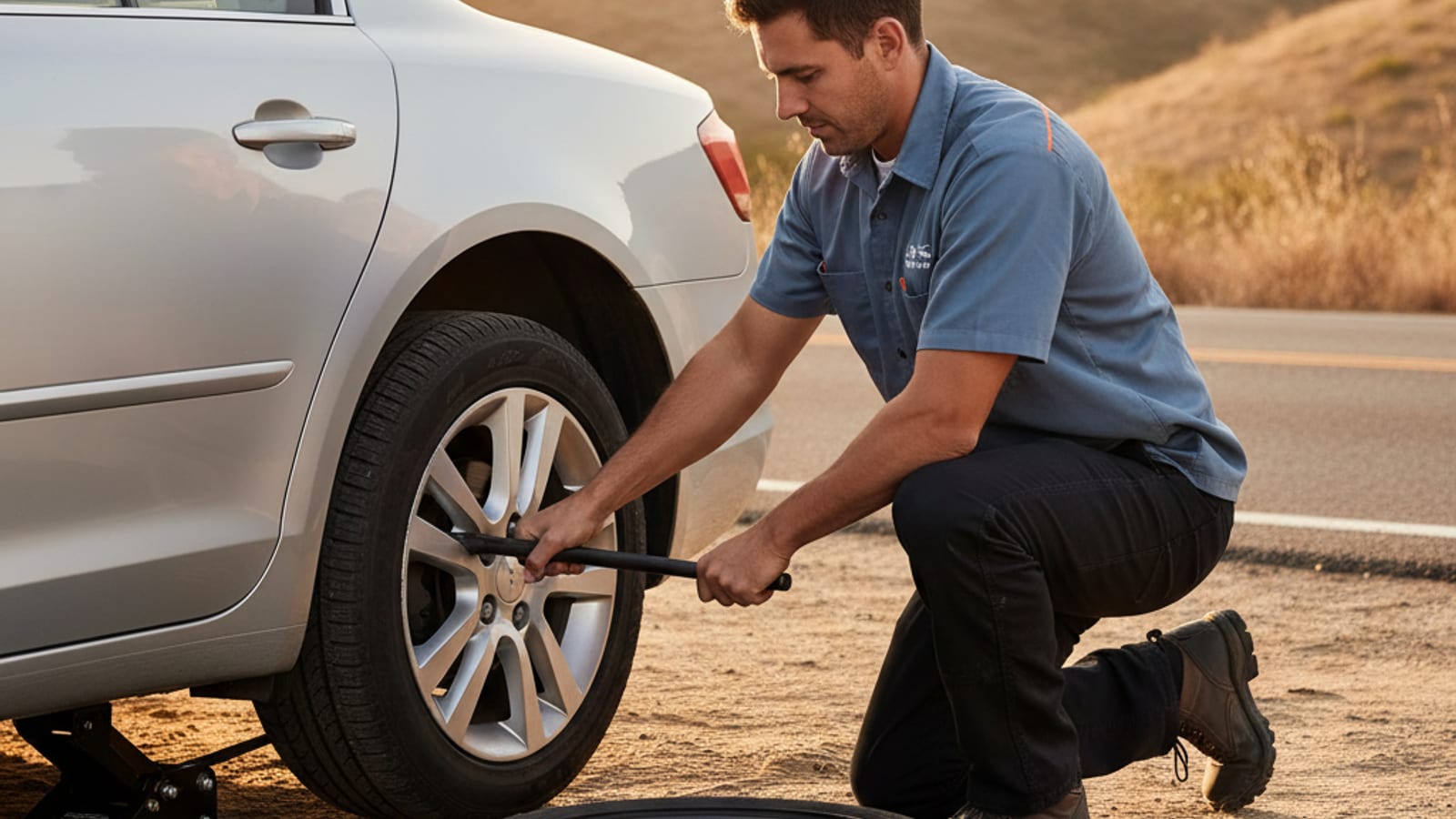
What you'll learn
- Why the traffic-side of a vehicle is the dangerous side for a DIY change
- Where the jack point is on most modern vehicles (check the owner's manual)
- The correct lug-nut loosening pattern (star/cross, not circle)
- When to call for a tow instead - highway shoulders, curbs without room, or damaged sidewalls
Step by step
- Pull off into a safe flat spot - away from traffic, off a shoulder if possible.
- Set the parking brake. Turn on hazard lights. Put the transmission in park (or 1st gear on manual).
- Loosen the lug nuts half a turn each before jacking - while the tire is still on the ground.
- Position the jack at the factory jack point under the frame. Raise until the tire is 1-2 inches off the ground.
- Remove the lugs, swap the flat for the spare, hand-tighten lugs in a star pattern.
- Lower the car fully. Torque the lugs in the same star pattern.
- Drive directly to a tire shop. A compact spare carries a speed and distance limit printed on the tire and in the owner manual, so read yours before you set off.
If you are on the shoulder of I-35W, I-94, I-494 or the MN-62 Crosstown, call for a tow to a safe lot instead. Minnesota law (Statute 169.32) says a vehicle stopped outside a business or residential district must leave at least 20 feet of clear width and stay visible for 200 feet in each direction, which is impossible on a tight metro shoulder in traffic. MnDOT's FIRST crews patrol about 220 miles of Twin Cities freeway roughly 6 a.m. to 8 p.m. on weekdays, and because they patrol constantly they are often first on scene. They can change a flat, but they do not tow, so for a damaged sidewall or a shoulder with no room, ask for a tow to a shop. For an active emergency, dial 911.
Decide whether the roadside is safe before touching the tire
A flat tire doesn’t automatically mean you should change it where the car stops. On a narrow Twin Cities shoulder, moving farther from traffic is often safer than starting the repair immediately. Turn on the hazard lights, slow down smoothly, and look for a flat location away from moving vehicles.
Minnesota Statutes 169.32 applies outside business and residential districts. A stopped vehicle must leave at least 20 feet of clear roadway and remain visible for 200 feet in each direction. A disabled vehicle that cannot be moved is excepted. That exception allows an immobile car to remain temporarily. It doesn’t make the location safe for a tire change.
A ramp, bridge deck, or narrow freeway shoulder may not provide enough separation. Curves and hills can also hide you from approaching drivers. If the car still rolls and you can move it safely, continue to a wider shoulder, parking lot, or another protected location. Don’t risk more vehicle damage by driving far on the flat. The goal is simply to leave the exposed spot.
The left shoulder is usually the wrong workshop
The left shoulder puts the driver’s side beside the fastest traffic. It may also leave no escape route if another vehicle drifts toward you. If traffic is passing only a few feet away, don’t kneel beside the wheel or place your body between the car and a live lane.
Stay inside with the seat belt fastened when that is the safer position. If smoke, fire, leaking fuel, or another immediate danger makes the vehicle unsafe, get away from traffic and call 911. Never stand in a traffic lane to inspect the tire.
If the car cannot reach a safer location, ask for roadside help. A tow may be the right choice even when you have a spare, jack, and lug wrench. Having the tools doesn’t create enough working room on I-35W, I-94, I-494, I-694, or the MN-62 Crosstown.
Check what the impact damaged
Twin Cities potholes and curb strikes can affect more than the tread. Before installing a spare, look at the tire, wheel, and the car’s position. A small tread puncture is different from a torn sidewall, a bent rim, or a blowout.
- Tread puncture: A tire shop may be able to repair some punctures in the tread area. Don’t assume every hole can be plugged. The shop must inspect its location, size, and internal damage.
- Sidewall cut or bulge: Don’t treat visible sidewall damage like a simple tread puncture. Install the spare only if the wheel and surrounding parts appear usable, then have the damaged tire inspected.
- Bent or cracked rim: A hard pothole or curb strike can damage the wheel. If the spare won’t sit flat against the hub, the lug nuts won’t tighten normally, or nearby parts look bent, stop.
- Blowout: A shredded tire may damage the wheel well or nearby components. Look for loose material and anything hanging near the brakes or suspension before deciding whether the spare is enough.
A spare can solve the missing-tire problem without solving damage caused by the impact. Stop driving if the car pulls sharply, shakes, makes new scraping sounds, or the spare doesn’t remain secure. Those signs need professional inspection rather than another roadside adjustment.
Know what your car carries before the flat
Many vehicles don’t carry a conventional spare. Your car may have a full-size spare, compact spare, sealant kit, inflator, or run-flat tires. Some vehicles have no complete roadside solution. Check the cargo floor, side compartments, and owner’s manual before a breakdown.
The owner’s manual and the label on the spare set its speed, pressure, and distance limits. Those limits vary, so this guide can’t give one verified number for every vehicle. Read the tire itself before driving. A compact spare is temporary equipment, not a replacement for the damaged tire.
A sealant kit also has limits. It may not work on sidewall damage, a large opening, or a tire that has separated from the rim. Sealant can also affect how the tire is inspected and repaired. Tell the tire shop exactly what product entered the tire. The kit label and vehicle manual should explain where it may be used.
Run-flat range isn’t universal. Load, tire condition, speed, temperature, and the manufacturer’s design can change what is permitted. Check the tire markings and owner’s manual. If you cannot confirm the limit, don’t guess based on another vehicle.
Winter makes a roadside tire change less stable
Cold weather adds several hazards before the wheel comes off. Lug nuts may resist the wrench. Snow and road salt can hide the correct jack point. Packed snow may look solid while collapsing under the jack.
Clear the area until you can see firm pavement and the manufacturer’s jack point. Don’t place the jack on ice, a snowbank, loose gravel, or a soft shoulder. A leaning jack can slip as the vehicle rises. Never put any part of your body beneath a car supported only by its roadside jack.
If the lug nuts won’t loosen with the supplied wrench, don’t jump on it beside traffic. If the jack begins to tilt or sink, lower the car if that can be done safely. A stubborn wheel isn’t worth continuing in an unstable location.
Cold weather can also trigger the tire-pressure warning. Pressure changes as temperatures fall, but the correct setting depends on the vehicle. Use the pressure shown on the vehicle’s tire-information label or in its manual. Don’t use a general number from another car, and don’t treat the number molded into the tire as the vehicle’s normal setting.
Check all four tires after the first hard freeze. If one tire loses pressure again after adjustment, have it inspected. A warning that returns may point to a puncture, valve problem, wheel damage, or another condition that needs diagnosis.
When to stop and call for help
Stop the DIY attempt when traffic is too close, the ground is unstable, the wheel is damaged, or the correct lifting point isn’t visible. The same applies when the spare is missing, flat, incompatible, or limited in a way you cannot confirm.
On Twin Cities metro freeways, MnDOT’s Freeway Incident Response Safety Team patrols 11 routes across about 220 miles. FIRST generally operates from about 6 a.m. to 8 p.m. Monday through Friday, with limited weekend coverage.
FIRST crews can push a disabled vehicle from a live lane, change a flat tire, jump-start a battery, provide a small amount of gas, clear debris, and call a tow truck. FIRST doesn’t tow vehicles. For an active emergency or a vehicle exposed in a live traffic lane, call 911.
For a non-emergency towing or roadside request, Quick Tow Minneapolis is a referral line connecting drivers with independent local operators. The line accepts calls at any hour and records and transcribes each message. Nobody answers it live. Call (952) 900-4065 and leave your location, vehicle details, and a clear description of the damage.
A pro can handle it.
Towing and roadside service across the Twin Cities metro. One local line, taking calls day and night.
Keep learning.
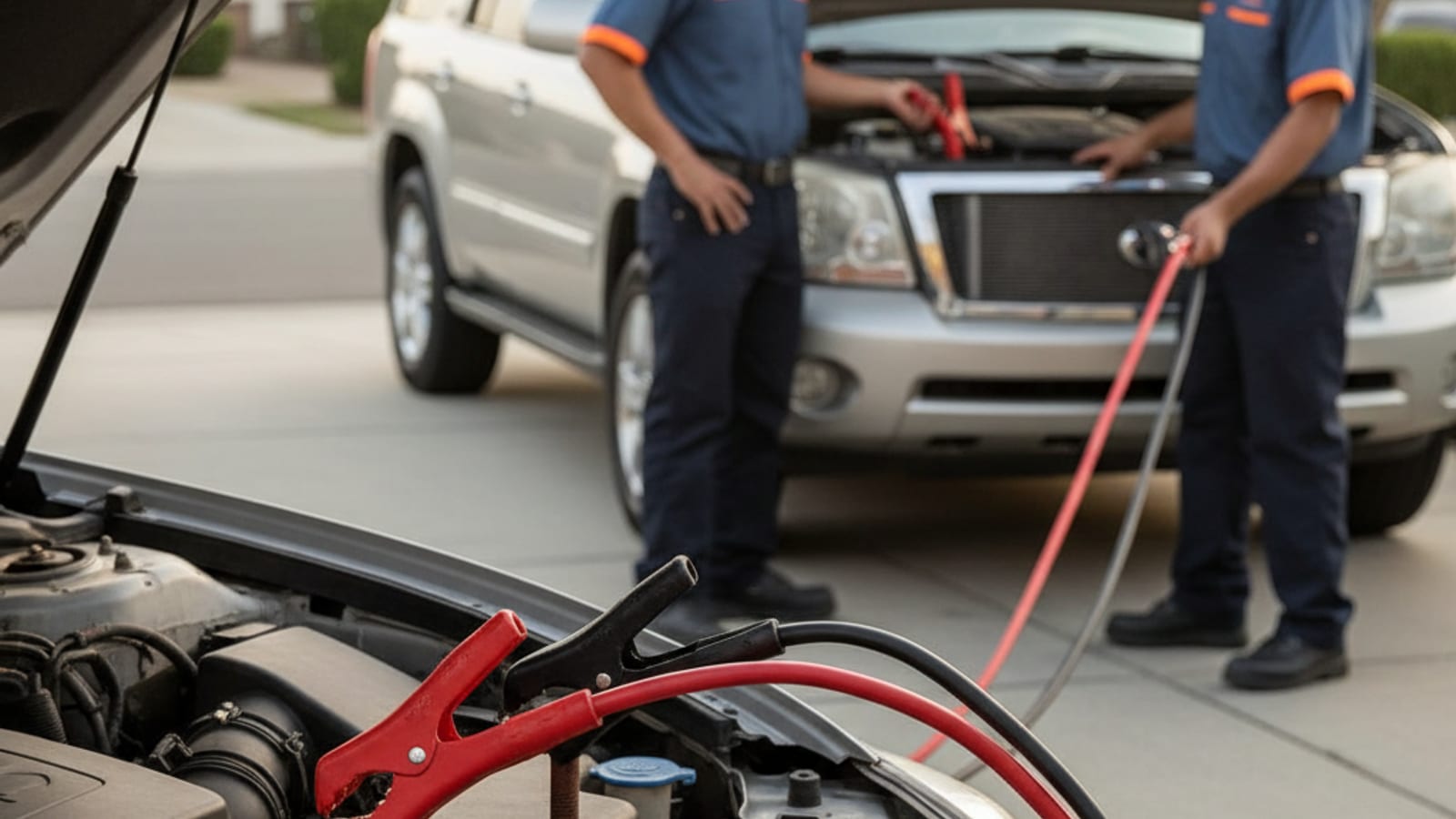
Jump-start a dead battery safely
Jumper cables are simple until you hook them wrong. Do it right and you'll avoid sparks, ruined electronics, and a tow you didn't need.
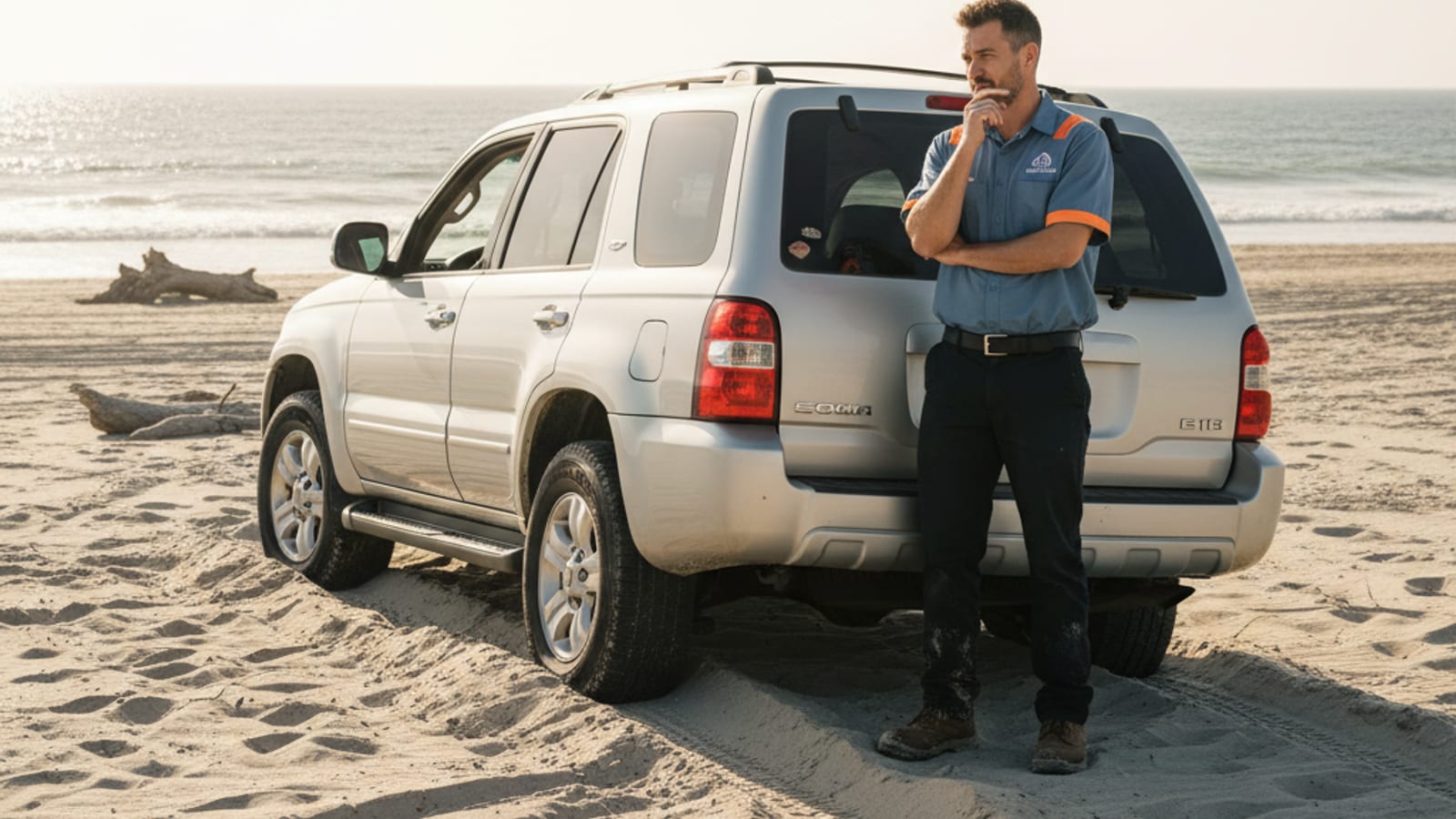
What to do if you slide on ice or hit a flooded low spot
Twin Cities winters glaze bridges and ramps before flat streets, and a heavy spring rain fills a low underpass faster than it looks. First step: stop making it worse.
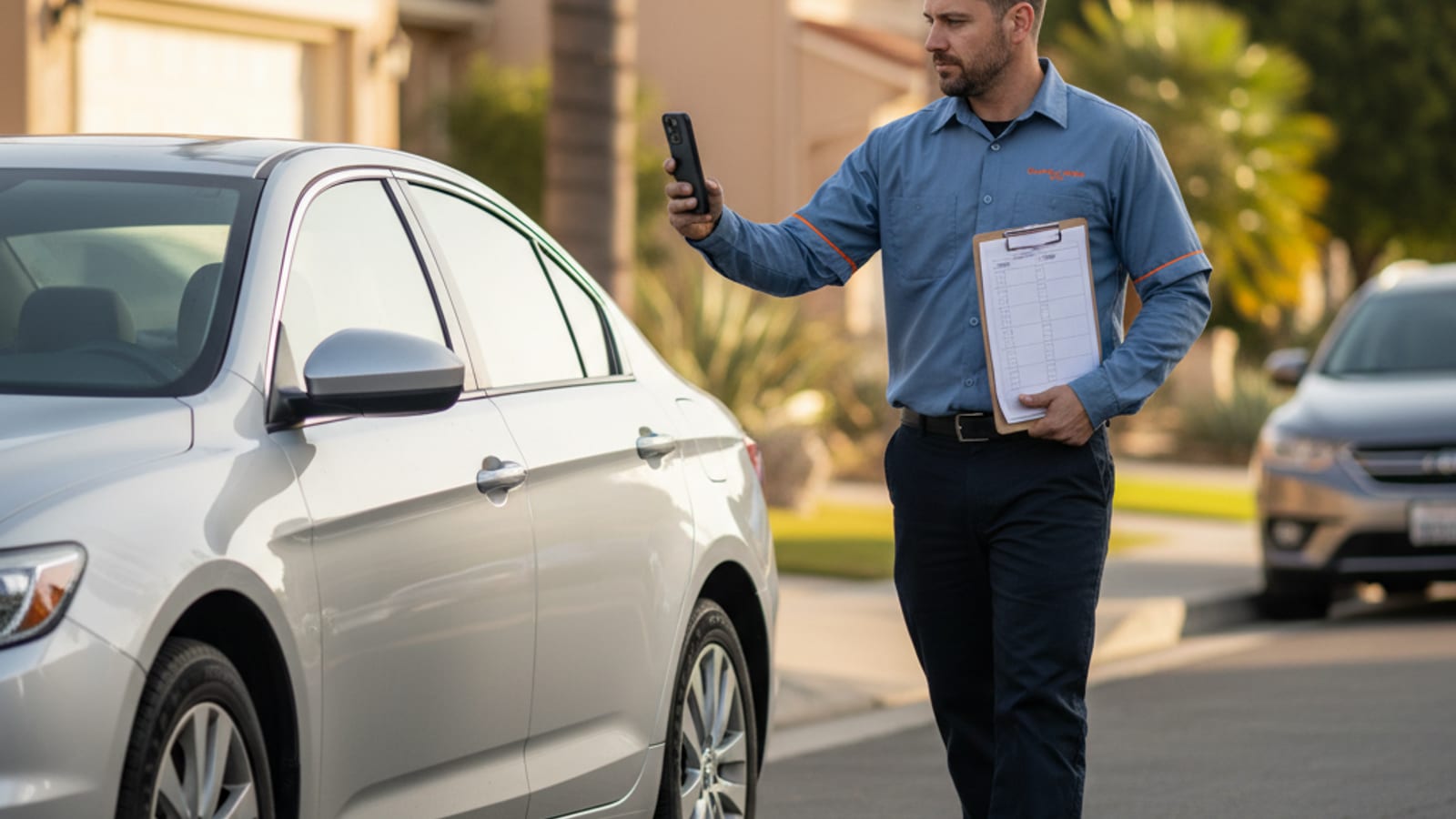
Prepare your vehicle for a tow
A few minutes of prep before the tow truck arrives saves time, avoids damage, and makes the whole call go faster.