Prepare your vehicle for a tow
A few minutes of prep before the tow truck arrives saves time, avoids damage, and makes the whole call go faster.
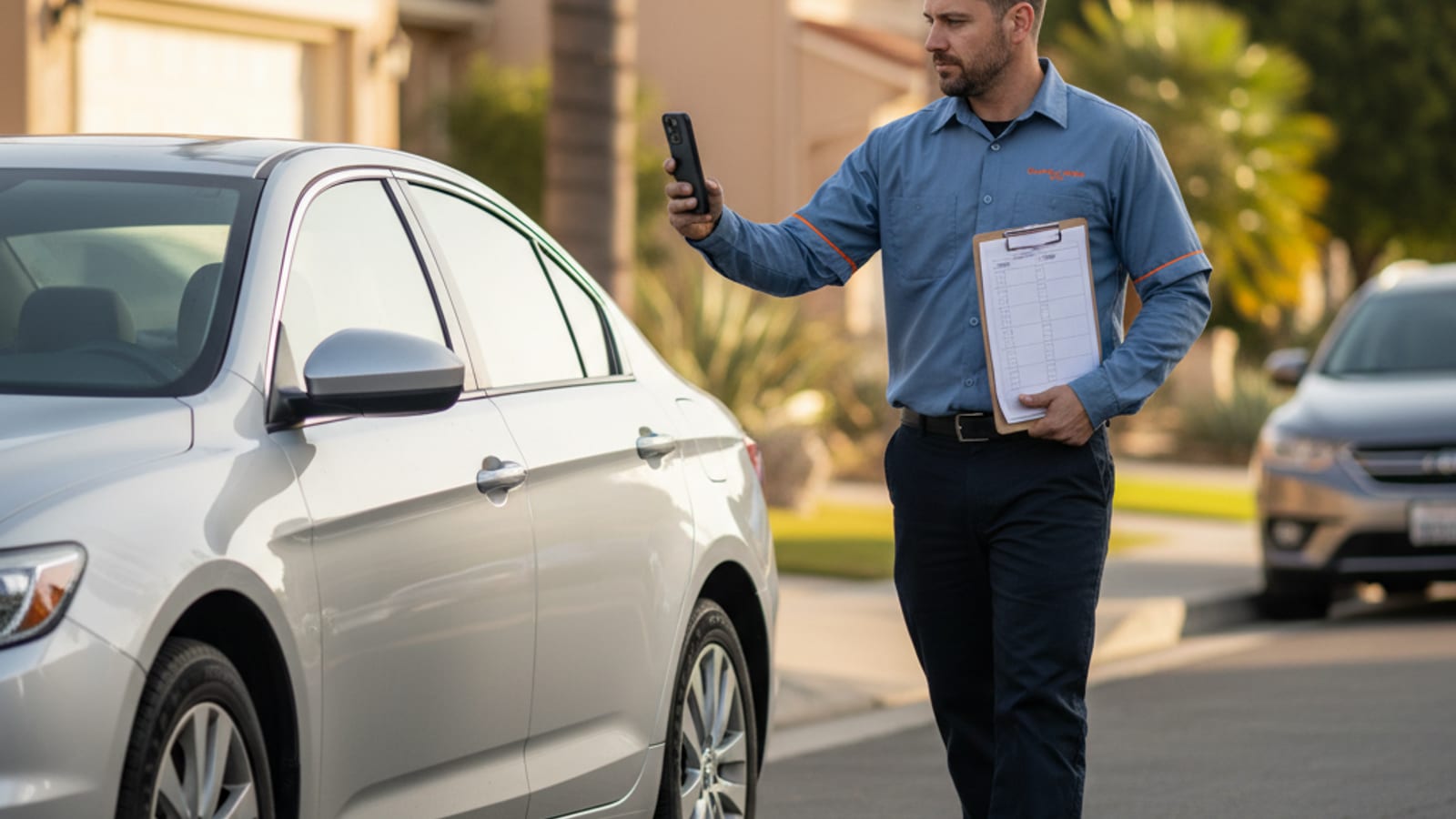
What you'll learn
- What to take out of the car before it goes on the flatbed
- Whether to disconnect the battery (usually no - but sometimes yes)
- Why photographing the vehicle beforehand protects you
- What transport mode is and when your EV needs it
Step by step
- Remove valuables, registration, and any loose items inside the cabin.
- Photograph all four sides of the car before loading. Save the photos.
- If the car has an alarm, turn it off or disable motion sensing.
- For EVs: engage transport mode per your owner's manual.
- Note any pre-existing damage and point it out to the driver.
- Leave fuel in the tank unless the driver tells you otherwise.
Photos before the tow protect both you and the driver. Ask the assigned operator whether they photograph the load; your photos still back up the story.
Tell the operator what kind of pickup this is
The right truck depends on the car, its condition, and its location. Give those details before an operator is selected. A clear description helps avoid sending equipment that cannot load the vehicle safely.
Drivetrain and wheel condition
State whether the car is front-wheel drive, rear-wheel drive, or all-wheel drive. If you are unsure, check the owner’s manual or the badge on the vehicle. You can also provide the year, make, model, and trim so the operator can confirm it.
Say clearly if the vehicle is all-wheel drive. An all-wheel-drive car should not travel on a wheel-lift with two wheels rolling on the road unless its manufacturer allows that method. The rotating wheels can force parts of the driveline to move in a way they were not designed to move. That can damage the transmission, transfer case, or differentials.
Use plain language when you call: “This is an all-wheel-drive vehicle. Please send a flatbed unless the owner’s manual approves another method.” That gives the referral line the information needed to seek the right operator the first time.
The operator also needs to know whether every wheel rolls. Mention a seized brake, damaged axle, flat tire, missing wheel, or wheel pushed against the body. Say whether the steering unlocks and whether the car can shift out of Park. A vehicle with locked wheels may need different loading equipment than a car that rolls freely.
Position, clearance, and keys
Describe how the car is sitting. Is it upright on all four wheels, resting on a curb, stuck in snow, or damaged after a collision? Tell the operator if a wheel has left the pavement or the car is against a wall. Photos can help explain a position that is hard to describe.
Report low ground clearance before the truck is chosen. This matters for lowered cars, sports cars, and exotic vehicles. Tell the operator about a low front splitter, side skirt, damaged suspension, or exhaust close to the pavement. Ask whether suitable loading equipment is available for that clearance.
A key may be needed to unlock the steering or move the transmission out of Park. Say whether you have the key, whether the key works, and whether the battery is dead. Do not promise that a keyless car can be moved just because the doors open.
For an electric vehicle, provide the exact make and model. EV weight and approved towing methods vary by vehicle. Most EV manufacturers call for a flatbed, but the owner’s manual controls. Tell the operator if the battery is dead, transport mode will not engage, or the car will not release Park.
A parking ramp creates another limit. Read the posted entrance clearance and give that number when you call. Also describe the level where the car sits and whether the route includes tight turns. The operator can then decide whether available equipment can enter the ramp.
Remove what you will need later
Take identification, registration papers, insurance documents, medication, work equipment, and personal electronics. Remove wallets, cash, keys, mail, and anything showing account information. A car going to an impound lot is not somewhere you want to leave anything you may need that week.
Take child seats if another vehicle will need them. Remove garage remotes, building access cards, toll devices, and house keys. Check the glove box, center console, door pockets, trunk, and the space beneath each seat.
Leave items that belong with the vehicle when they help identify or operate it. The key may need to stay with an owner-authorized transport, but confirm who will hold it and how it will be documented. Do not leave the title unless a specific transaction requires it.
License plates require judgment. They may remain with a vehicle going to an impound lot. A vehicle being transferred for disposal or another owner-authorized purpose may be different. Ask the destination and the operator before removing them. Do not remove a plate to interfere with an official tow or vehicle identification.
Build a clear photo record
Photograph the car before loading begins when you can do so safely. Start with wide images from all four corners. Each image should show one side and either the front or rear. This records the vehicle’s overall condition and position.
Take close photos of every dent, scrape, cracked panel, broken light, and damaged wheel. Photograph all four wheels, including how each tire meets the pavement. If the car sits unusually low, capture the space beneath the bumpers and rocker panels.
Photograph the dashboard with the ignition on when possible. Include the odometer and visible warning lights. Save a clear image of the gear position if it appears on the display.
For a private-lot removal, photograph the parking area and every posted towing sign. Capture the sign from far enough away to show where it stands, then take a close image that preserves its wording. If no sign is visible, photograph the entrances and the area around the vehicle. Minnesota Statutes 168B.035 uses the term “properly posted,” but it does not define statewide sign size, wording, or placement. Local rules may add requirements.
Photograph the tow truck, its markings, and the loaded vehicle. Keep the original files with their timestamps. This record is often what a later dispute turns on.
Ask three questions before the hookup
If you are present and it is safe to speak with the operator, ask who ordered the tow. The answer may be you, a property representative, law enforcement, or a city department. That distinction helps identify which towing rules and retrieval process apply.
Ask exactly where the vehicle is going. Get the facility name and address. A city impound, suburban impound arrangement, private storage facility, and owner-selected repair shop are different destinations.
Ask for the price in writing before an owner-authorized tow begins. Confirm what the written amount covers and whether storage could apply at the destination. Quick Tow Minneapolis does not publish a brand towing rate.
For a private-property tow, Minnesota Statutes 168B.035 says the charge must be reasonable for the type of vehicle removed and the circumstances surrounding its removal. The statute does not provide one statewide price. Keep the written charge, photographs, and information showing who ordered the removal.
Know which impound system has the car
A Minneapolis city tow goes to the Minneapolis Impound Lot at 50 Van White Memorial Blvd, Minneapolis, MN 55405. The published 2026 impound tow fee is $222. Storage is $18 per day, assessed at midnight, and the notification letter is $6.
The Minneapolis lot is open from 8 a.m. to 10 p.m. Monday through Saturday and 9 a.m. to 5 p.m. Sunday. During Day 1 and Day 2 of a declared Snow Emergency, it is open continuously. On Day 3, it closes at 1 a.m. before returning to the posted schedule. Call (612) 673-5777 or use the city’s vehicle search with the plate or VIN.
A regular St. Paul city tow goes to 830 Barge Channel Rd, St. Paul, MN 55107. That lot is open every day from 8 a.m. to 10 p.m. Its public number is 651-266-5642. A current regular-tow total could not be confirmed from the approved information. Check the St. Paul Police Impound Lot before paying.
A St. Paul snow-emergency tow goes somewhere else: 1129 Cathlin St, St. Paul, MN 55108, near the State Fairgrounds. Its public number is 651-502-7480. The published total is $246 when the car is retrieved the same day before midnight. That includes a $143.89 tow charge, $80 administration charge, and $22.11 sales tax. Storage adds $15 per day beginning at midnight. The separate $56 parking ticket is paid to the Minnesota courts, not the impound lot.
A suburban tow does not use the Minneapolis or St. Paul fee schedule. Bloomington, Edina, Brooklyn Park, and other suburbs set their own arrangements and charges. A verified metro-wide suburban price is not available. Contact the city that ordered the tow and confirm the destination, current fee, accepted payment, and release requirements.
Prepare for a winter hookup
Clear snow from the roof, windows, lights, and the area around the wheels when it is safe. Tell the operator if the parking brake is frozen, a wheel will not turn, or packed snow holds the car in place. Do not force a frozen control if it will not release.
A plow ridge can trap the vehicle even when the engine runs. Describe how deep the car sits and whether the front, rear, or underside rests on snow. The operator needs that information before choosing a loading approach.
During a snow emergency, the parking clock and the storage clock both matter. Minneapolis and St. Paul use different plowing phases and different impound systems. Confirm the city, locate the correct lot, and retrieve the car as soon as you can. Daily storage can begin at midnight, so a same-day pickup may prevent another day’s charge.
A pro can handle it.
Towing and roadside service across the Twin Cities metro. One local line, taking calls day and night.
Keep learning.
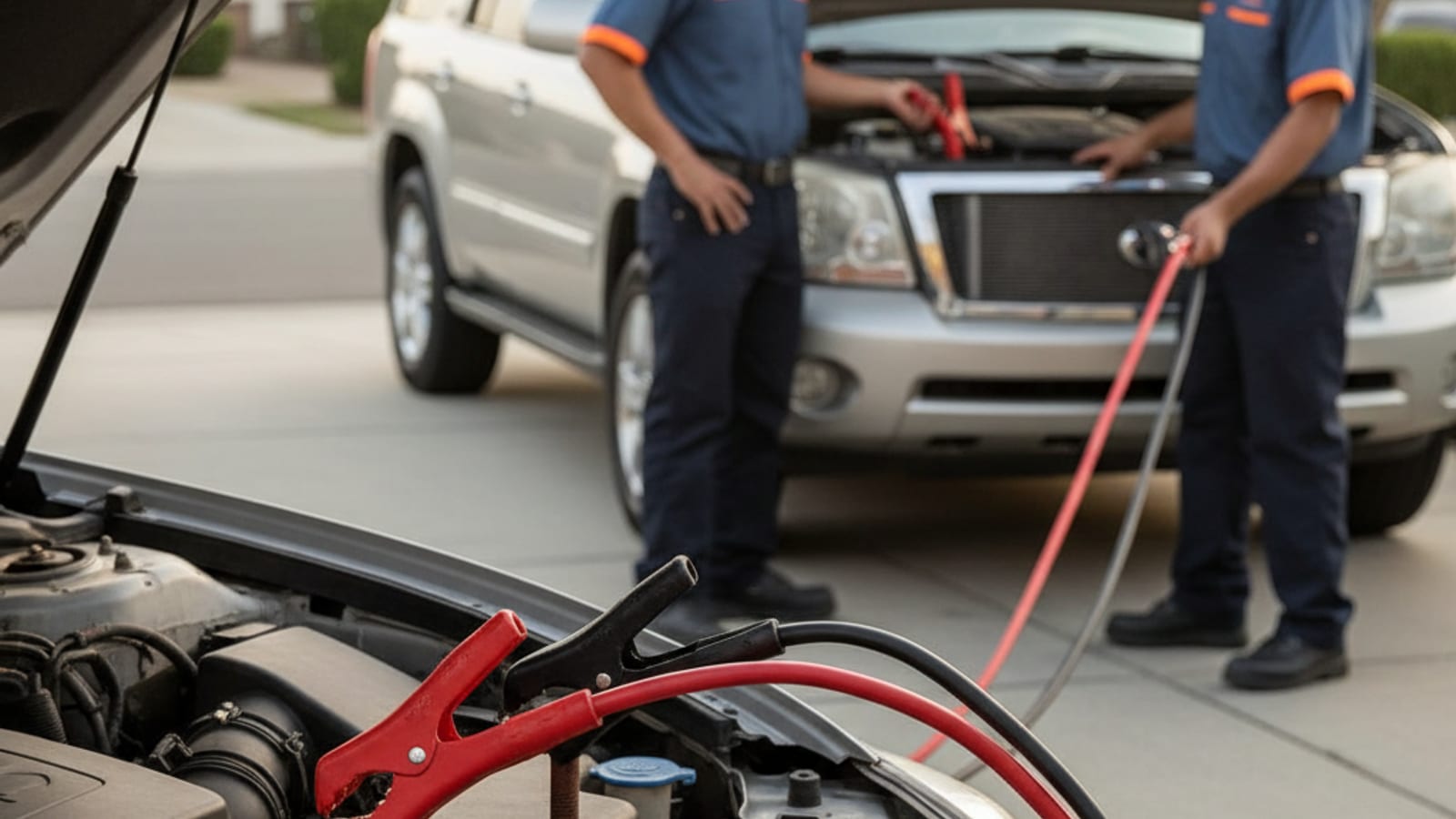
Jump-start a dead battery safely
Jumper cables are simple until you hook them wrong. Do it right and you'll avoid sparks, ruined electronics, and a tow you didn't need.
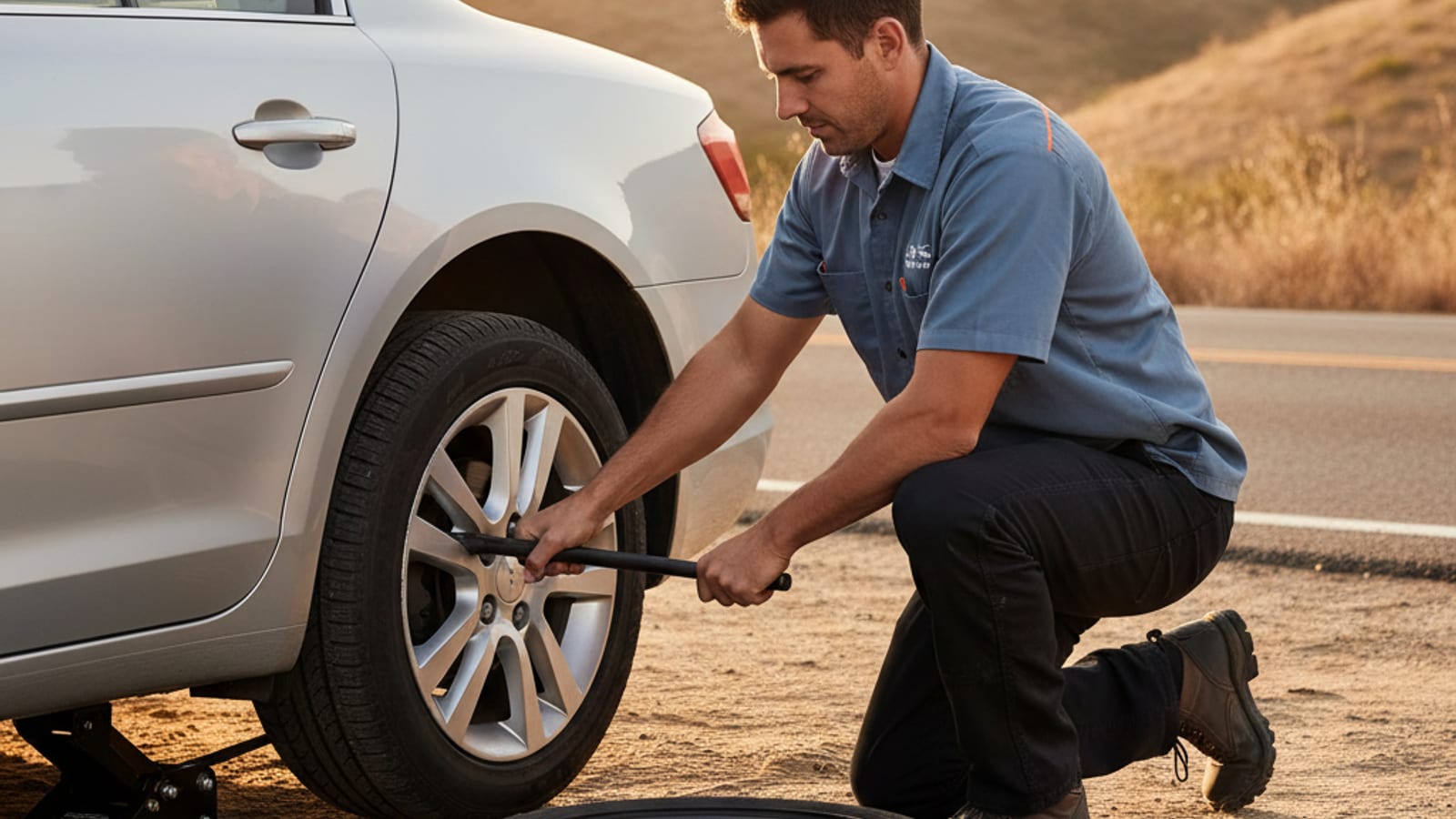
Change a flat tire on the side of the road
The difference between a 20-minute shoulder stop and an hour on the phone with a tow company is knowing where the spare and jack live before you need them.
What to do if you slide on ice or hit a flooded low spot
Twin Cities winters glaze bridges and ramps before flat streets, and a heavy spring rain fills a low underpass faster than it looks. First step: stop making it worse.